A trip report from one of Africa’s most extraordinary destinations. Plus 10 questions every first-time Namibia traveller asks, answered by our consultant in the field.
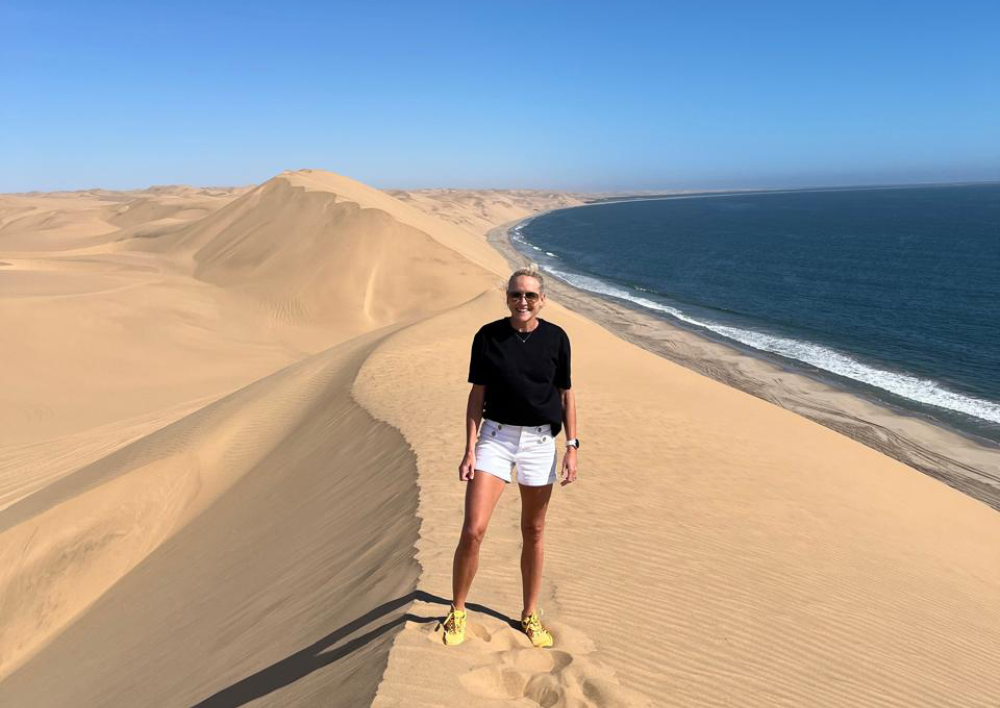
There are destinations you read about and destinations that steal your heart. Namibia is the latter.
Our safari consultant, Camille Rowe, recently returned from an eleven-day journey through Namibia’s most iconic landscapes, hosted by our trusted ground partners at Namibia Tours & Safaris – and she came back more convinced than ever that this country belongs on the shortlist of anyone who thinks they’ve already seen the best of Africa.
This is her trip feedback. Where to go, where to stay, how to pace it, and why Namibia rewards those who give it the time and have the right team planning it for them.
THE ROUTE: FROM DUNE, TO SEA, TO SALT PAN
WINDHOEK – A CIVILISED START ON THE HIGH PLATEAU
Framed by the Auas Mountains and Khomas Hochland, Namibia’s capital is an underrated entry point. Good coffee, excellent restaurants, vibrant craft markets, and a cosmopolitan energy that gives you space to decompress after the long haul before you venture into the wilderness.
Where to stay: The Weinberg offers a stylish, well-located base with the feel of a boutique property rather than a transit hotel.
NAMIBRAND NATURE RESERVE AND SOSSUSVLEI
Two nights
A visit to the Sossusvlei is something that everyone should do: climb to the top of Dune 45 and visit the Deadvlei with its five-hundred-year-old camelthorn skeletons rising from a bleached clay pan.
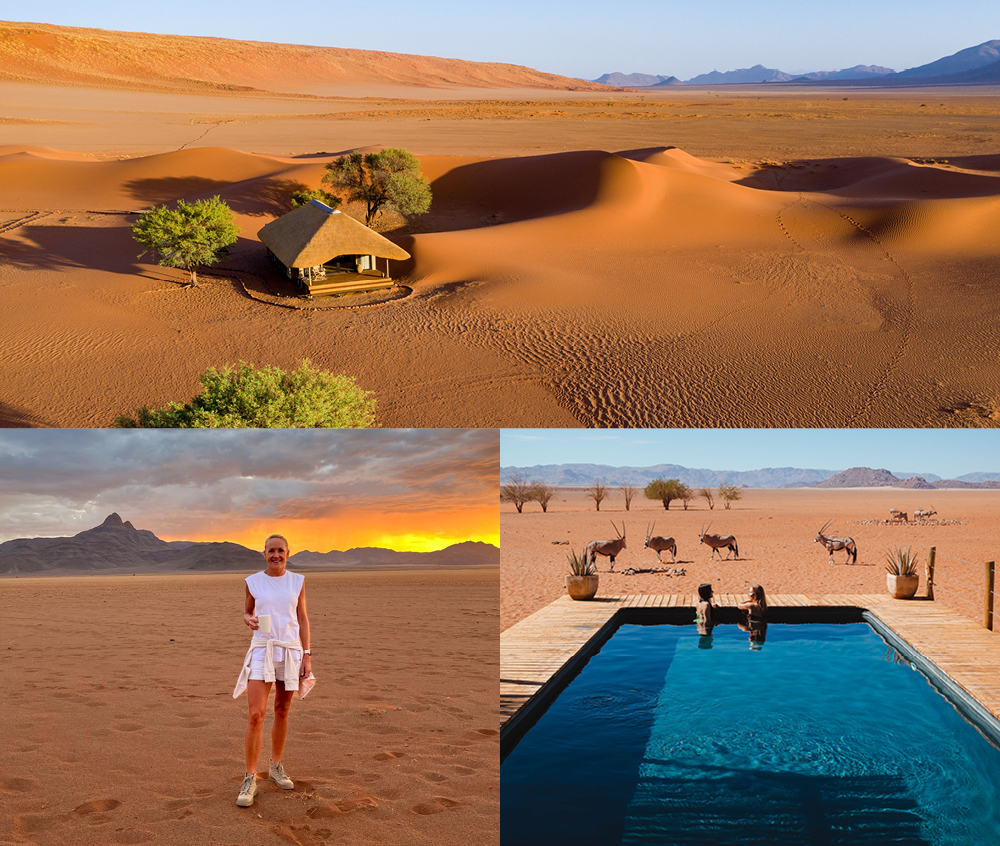
The drive south is itself part of the experience – dramatic mountain passes give way to a landscape so vast and so red it barely seems real.
After dark, the NamibRand Dark Sky Reserve earns its designation completely. The Milky Way is spectacular. For those who want to make the most of a dawn start, an optional hot-air balloon flight at sunrise is one of the best ways to start the day.
Where to stay: Kwessi Dunes – beautifully positioned with panoramic red-sand views, an elegantly understated design aesthetic. Lie at the pool and watch the oryx come down to drink. Simplicity that lets the landscape speak.
SWAKOPMUND AND THE SKELETON COAST – WHERE THE DESERT MEETS THE ATLANTIC
Two nights
The change of scene when you reach the coast is almost theatrical. The colour palette shifts entirely – terracotta gives way to silver fog, ochre to seafoam. Swakopmund retains its German colonial architecture and a breezy, almost European character that makes it feel like nowhere else in Africa. The cold Benguela Current keeps temperatures mild and delivers exceptional seafood.
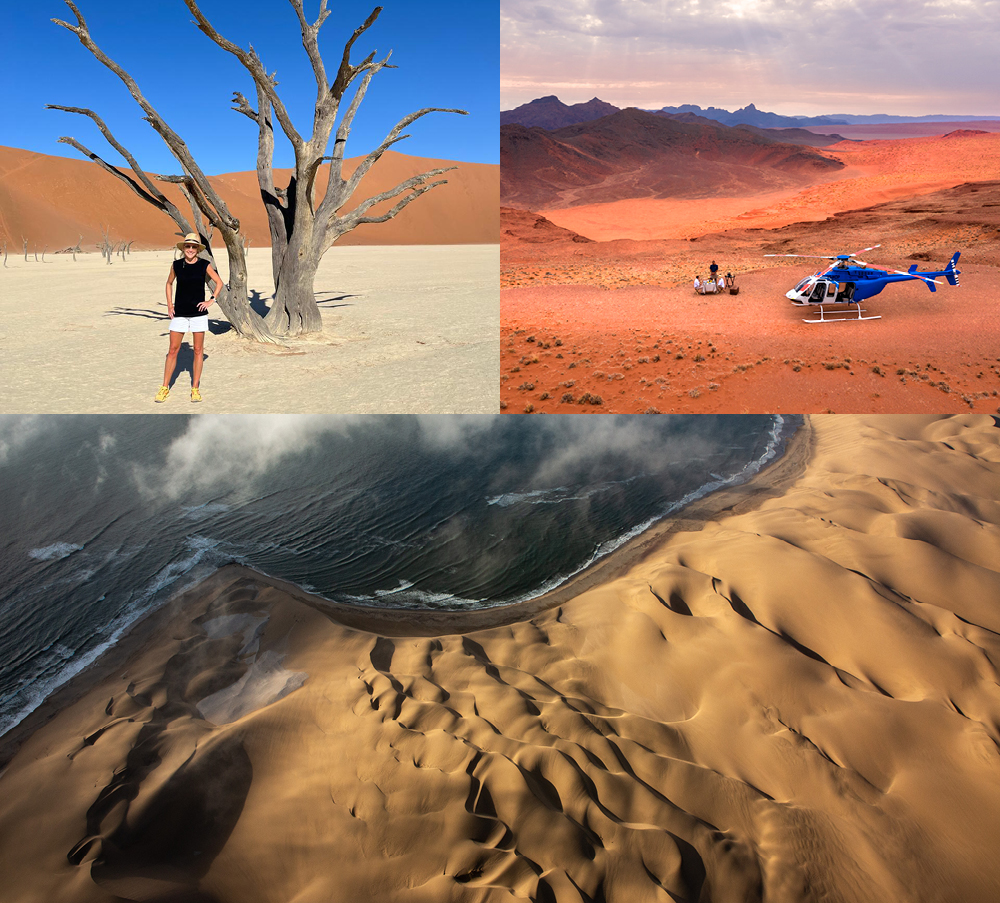
Activities here are playful and diverse: living-desert tours introduce guests to the extraordinary “little five” of the Namib – sidewinding adders, dancing white lady spiders, fog-basking beetles – while marine cruises bring you alongside Cape fur seals and dolphins. For the more adventurous, e-biking across the dunes or a scenic flight over the Skeleton Coast’s shipwrecks and salt pans provides a perspective that simply can’t be matched on the ground.
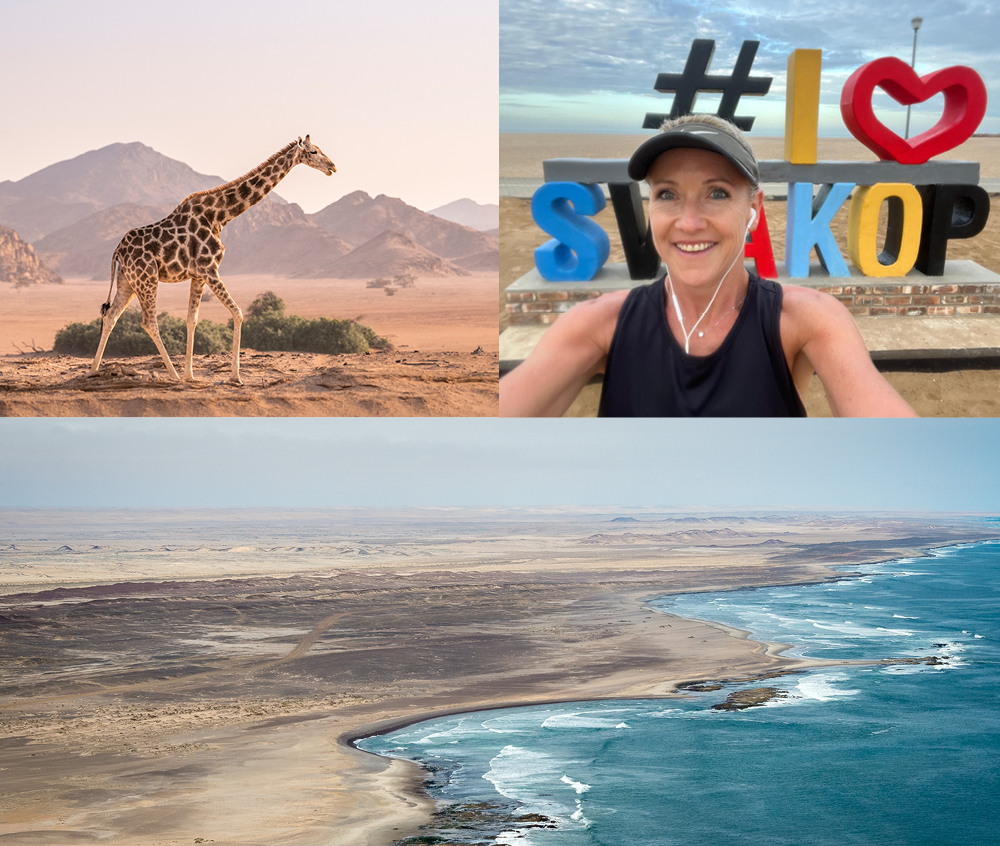
Where to stay: The Strand Hotel is well-positioned in the heart of town for walkability and easy access to the waterfront dining scene.
DAMARALAND – ANCIENT STONE AND DESERT GIANTS
Two nights
If Sossusvlei is Namibia at its most spectacular, Damaraland is Namibia at its most quiet and powerful. This is a landscape of immense geological drama: granite kopjes, the extraordinary basalt formations of Burnt Mountain and the Organ Pipes, and the UNESCO-listed Twyfelfontein rock engravings – thousands of images carved into sandstone over millennia by the San people.
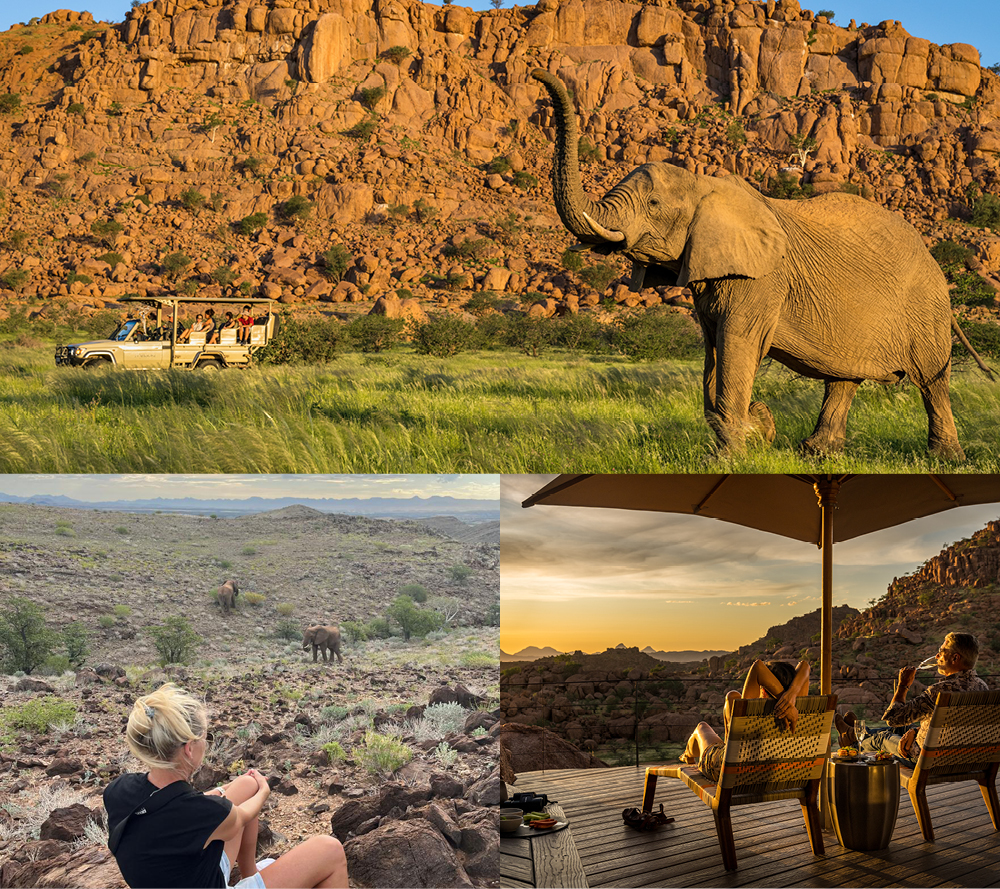
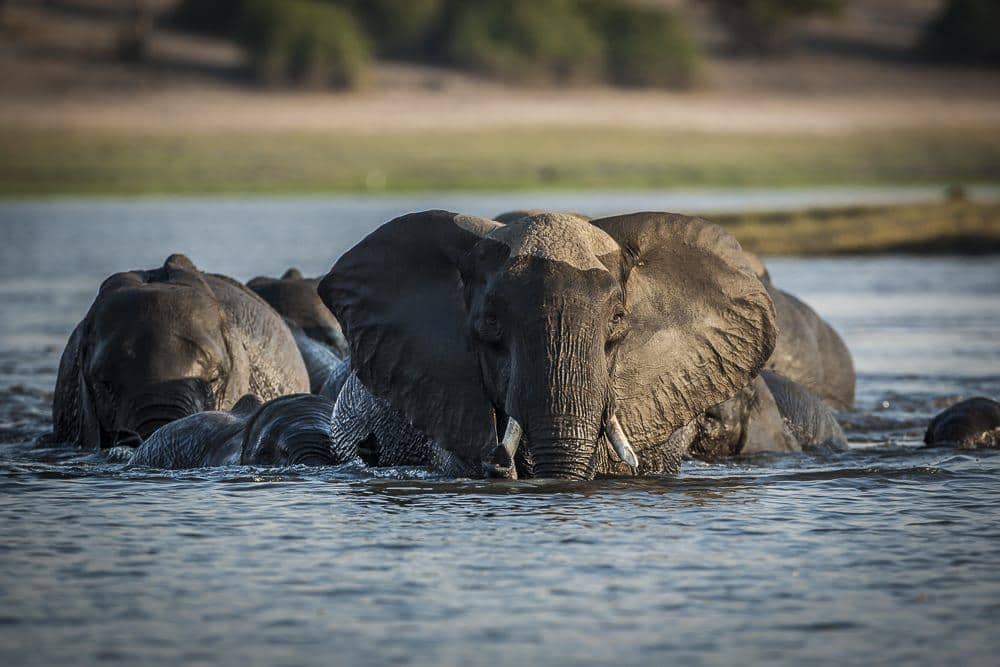
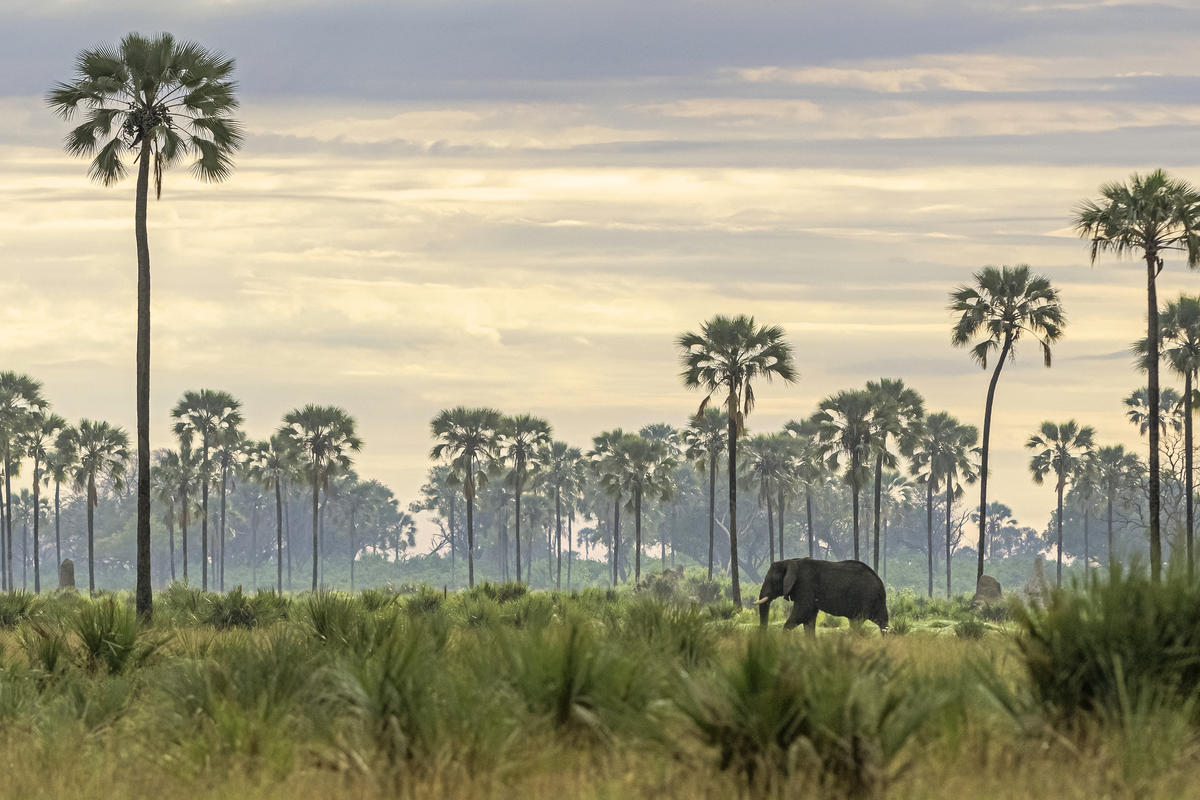
Experience tracking desert-adapted elephants along the dry seasonal riverbeds. These are not the same elephants you’ll see at a waterhole in Etosha – they’re leaner, more self-sufficient, and their presence in this landscape feels surreal. A visit to the Damara Living Museum adds a cultural dimension that enriches everything else you see.
Where to stay: Mowani Mountain Campi is Camille’s top pick – perched dramatically among enormous boulders with views across the valley, sensitively designed, and within easy reach of all the key sites. Twyfelfontein Adventure Camp offers excellent value for those seeking a more explorer-style base.
ETOSHA NATIONAL PARK – THE GREAT WATERHOLE WATCH
Four nights, split between south and east
Etosha operates differently from any other safari destination in Africa. The park’s great salt pan – 4,800 square kilometres of blinding white – creates a concentrated ecosystem around its edges, where a finite number of waterholes become the centre of the wildlife world. You don’t track animals here. You wait and watch as wildlife gathers before you – and what assembles is quietly extraordinary.
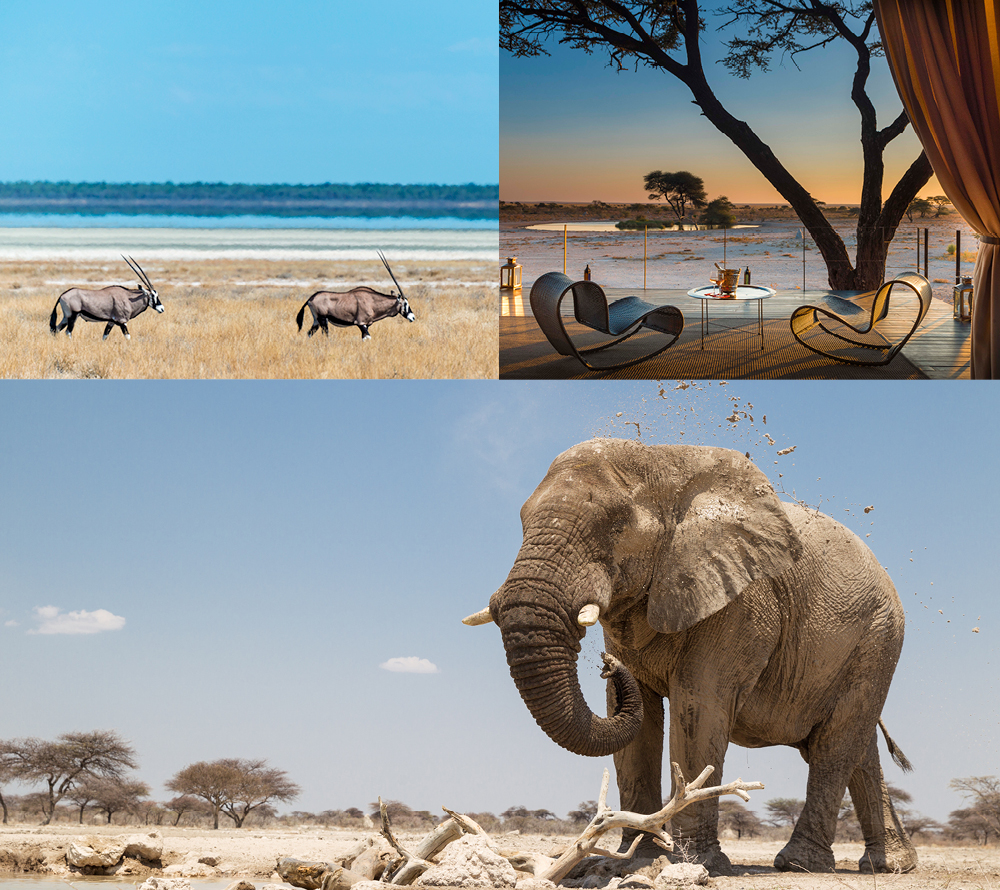
Camille spent her first two nights based near Andersson’s Gate in the south, which offers excellent predator sightings and consistent elephant traffic. The other 2 nights in the east – wider pans, more open scenery – provides a complementary experience that makes the split structure worthwhile.
Where to stay:
- South: Encounter Ongava, on the Ongava Private Game Reserve bordering Etosha’s southern boundary. Private-reserve game drives and exclusive Etosha access through a dedicated gate make this exceptional.
- East: Onguma Camp Kala, on the Onguma Nature Reserve. An intimate four-suite camp with its own waterhole hide – the kind of property where you can sit with a drink in the late afternoon and simply let the world come to you.
OTJIWA PRIVATE GAME RESERVE – A GENTLE FINALE
One night
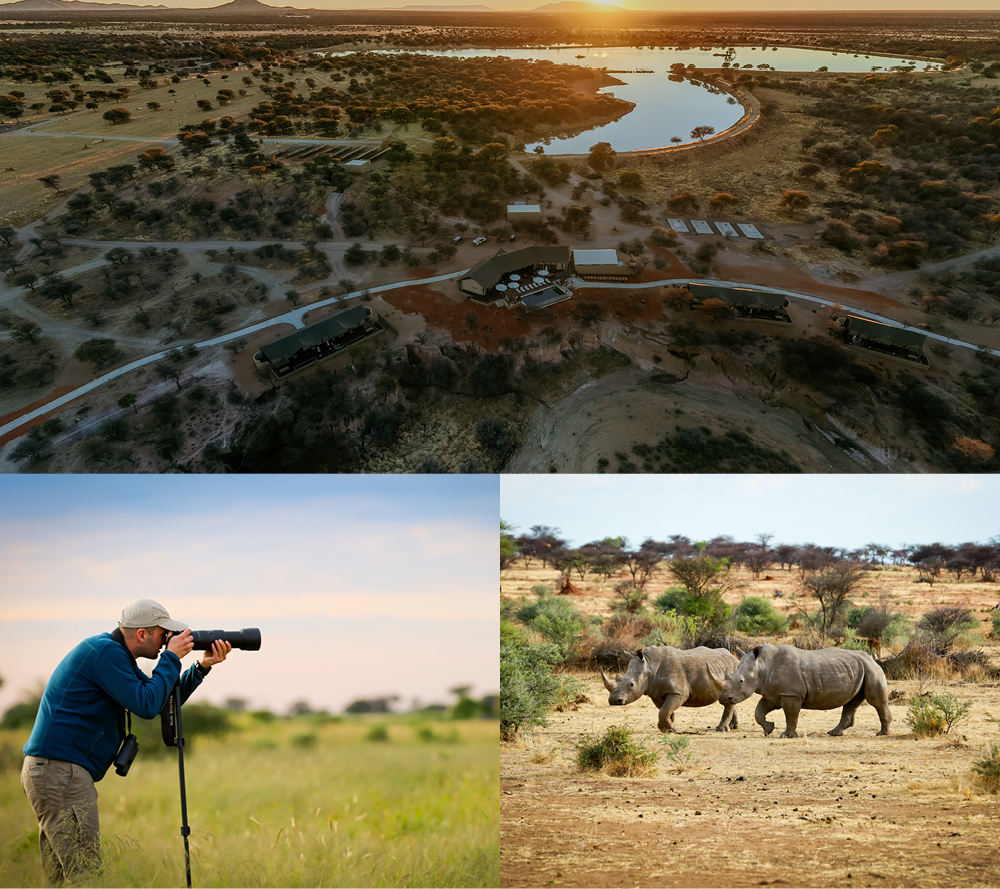
On the return toward Windhoek, Otjiwa offers what Camille calls “the exhale” – a beautifully paced final night in a private reserve setting where the tempo slows and you begin to process everything you’ve experienced. Rhino tracking on foot, guided birding walks, horse riding, and sundowners over a quiet riverbed. It’s a gentle, unhurried way to close a journey of this depth.
Where to stay: Otjiwa Collection – Mountain Lodge, with its sweeping elevated views and warm sense of arrival.
FINAL WORDS: RESIST THE URGE TO RUSH IT
Namibia is vast – physically, emotionally, conceptually. The distances between destinations are real, and the reward for taking it slow is genuine. For the kind of experience our clients are looking for, this route works best as a fly-in safari, moving between properties by light aircraft and eliminating the long road transfers that can erode the sense of immersion. You arrive at each lodge fresh, present, and ready – which is exactly what these places deserve.
Camille’s advice: resist the urge to rush it.
The lodges Camille has highlighted sit on private concessions and private reserves that give guests access to Namibia’s quieter, less-travelled side – off-road game drives, night drives, walking with rangers, private waterhole hides, and a level of personal service that offers genuine comfort without intrusion. The real luxury here isn’t in the facilities. It’s in the access.
YOUR TOP 10 NAMIBIA QUESTIONS ANSWERED
We put the 10 most common Namibia questions directly to Camille – here’s what she told us.
Q1: I’ve done a classic African safari. Will Namibia be different?
Absolutely – and in many ways it’s the perfect next chapter. East Africa gives you the volume and the drama of the great migrations. South Africa gives you the Big Five in a more accessible setting. Namibia gives you something different again: space, solitude, and a landscape unlike anything else on the continent. The wildlife encounters are often more unexpected, the sense of remoteness is genuine, and the absence of crowds – even at peak season – is something our clients consistently remark on. If a classic safari made you fall in love with Africa, Namibia will deepen that relationship considerably.
Q2: When is the best time to visit Namibia?
For most of what this itinerary covers, the dry season – June through October – is the sweet spot. Etosha’s waterholes are at their most productive as the surrounding bush thins out and animals concentrate around water. The Namib desert is beautiful year-round, but cooler temperatures in the mid-year months make the dune climbs far more comfortable. Swakopmund’s famous fog is a year-round feature, courtesy of the Benguela Current. And if you want to see the Namib briefly in bloom, the summer rains from November to January bring a short-lived but spectacular flush of green.
Q3: How many days do you actually need?
Eleven to twelve nights feels like the right number for a first visit that does justice to the key regions without feeling like a race. I’d be cautious about going much shorter – the transfers between destinations, even by light aircraft, take time, and the whole point of Namibia is complete immersion. If you have fourteen days, the extra time is best spent lingering in one or two places rather than adding more stops.
Q4: Will we be flying between destinations?
Yes – and it makes an enormous difference. Namibia is larger than France and Germany combined, and the distances between Sossusvlei, Damaraland, and Etosha are significant. Light aircraft transfers mean you arrive at each property energised rather than exhausted, and the flights themselves offer extraordinary aerial perspectives over landscapes you simply can’t appreciate from the ground. Most of the lodges on this itinerary have private airstrips or are within a short transfer of one.
Q5: What sets the lodges on this itinerary apart?
What makes these properties exceptional isn’t their facilities alone – though the design and quality are genuinely outstanding – it’s their position and access. Most are on private concessions that share boundaries with national parks. That means you’re not sharing your game drive with twenty other vehicles. The exclusivity isn’t a marketing word here – it’s an operational advantage that fundamentally changes the quality of every encounter.
Q6: What wildlife should we expect to see? Namibia has one of the most diverse wildlife profiles in Africa, and this route covers a remarkable range. In Etosha alone, you can expect lion, cheetah, elephant, black and white rhino, giraffe, zebra, wildebeest, and an extraordinary variety of antelope. Desert-adapted elephant and black rhino in Damaraland are genuinely rare encounters. The Namib’s iconic species – oryx, springbok, brown hyena – have evolved in extraordinary ways that make them endlessly fascinating. And the birdlife throughout is exceptional, particularly for serious birders.
Q7: Is Namibia suited to families, or is it more of a couples destination?
Both, but the experience skews romantic in the best possible way. The privacy of the lodges, the extraordinary night skies, the sense of being genuinely remote – it’s deeply connecting. Families with older children (typically twelve and above) do very well, particularly on walking activities and wildlife tracking. For younger children, it’s worth a conversation about which properties are most appropriate – some lodges have minimum age requirements for certain experiences.
Q8: Are the lodges genuinely private, or do you share game drives with other guests?
The lodges we work with here are genuinely small and exclusive. Onguma Camp Kala has four suites. Kwessi Dunes is intimate by design. Game drives in the private reserves are typically just your party and your guide. Even in Etosha, where you’re within a national park, arriving through a private conservancy gate with a private guide changes the experience entirely. This is exactly what our clients come to us for, and Namibia delivers it consistently.
Q9: What should we know about Namibia that most people don’t?
A few things that genuinely surprised me. First, the silence. In the right places – especially in the NamibRand – it’s profound in a way that very few destinations can offer. Second, the quality of the guiding. Namibian guides have an exceptional depth of knowledge, particularly around desert ecology and tracking. Third, the food and wine. South Africa’s wine regions supply these lodges beautifully, and the quality of cuisine – even in very remote settings – is impressive. And finally: the light. Namibia’s light is extraordinary. Photographers know it well, but it surprises everyone the first time they see it.
Q10: How do we start planning a Namibia journey with you?
The same way we plan everything – with a conversation. Every client has a different version of their ideal journey: some want to add Namibia to a broader Southern Africa itinerary, some want Namibia as a standalone experience, and some want to incorporate the Cape before or after. We talk through your travel style, your pace, your priorities, and the kind of experiences that genuinely move you – and then we build the journey around that. There’s no template here, and there shouldn’t be. Namibia is far too good a destination for an off-the-shelf itinerary.
READY TO START PLANNING?
If Camille’s itinerary has sparked something, we’d love to talk.
Get in touch with our team and let’s start designing your Namibia journey.
African Safari Consultants are specialists in bespoke, high-end safaris across Southern Africa. Every itinerary is crafted by consultants who travel these destinations themselves.