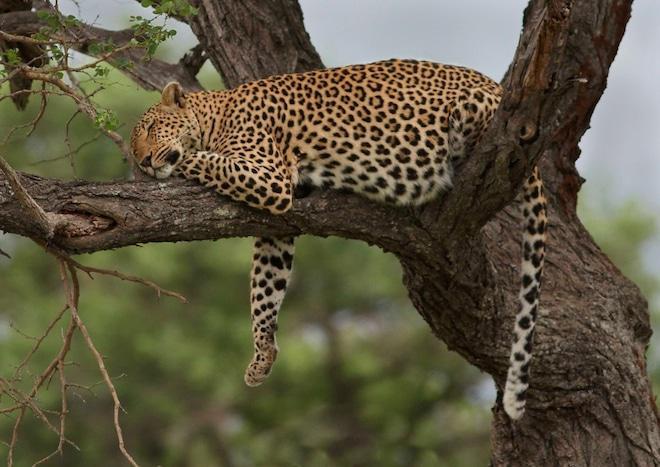
The name ‘Tuludi’ is a Tswana word that describes the colours or markings of the leopard. It is in fact a ‘royal’ color or marking that is held in very high regard in Botswana. (You’ll see why this is worth remembering in a few paragraphs from now.)

I think you’ll agree with me when I say that space is one of today’s most ached for and pursued luxury. And it’s not simply the absence of clutter, but the abundance of capacious calm. We’re finding, more and more, that this is today’s traveler’s most pressing priorities: space to breathe, space to daydreamily ponder, space to stretch out all the creaks and knots – in body and mind. Space to be; space to be yourself: utterly unhindered, in the now.
Space is the lacuna into which serenity flows after the clamor of our daily digitized hustle is silenced – or temporarily escaped from. And travel is, I believe, the most wondrous way to find your space.

The unwelcome ping of the email reply I’d been waiting for yanked me back into the reality of my laptop, cup of now-cold coffee and the perpetual thrum of activity from the safari consultants around me, fingers flying across the keyboard, phone calls to this client or that supplier, triple-checking availability for this lodge or that tented camp. The cursor at the end of the first line I’d typed about Natural Selection’s newest camp blinked back at me expectantly…
“We wanted Tuludi to reflect the space and freedom of its surroundings.”
 Once you’ve scrolled slowly through our photos of Tuludi, I’m sure you’ll agree that Natural Selection got it perfectly right! And this is how they got this dreamy treehouse-styled camp to reflect the Khwai’s vast, remote sense of space and unfettered freedom. (Replicate it at home — or book your stay!)
1. LOCATION (and a little bit of history!)
It was incredibly fascinating to see Tuludi in all her fully open and operational glory after having visited the camp while it was still a building site in September last year: a motley collection of building manager’s tents and piles of building supplies — in the middle of absolutely nowhere. (The builder did have a few stories to tell of lions roaring in the night and curious elephants close to camp during the build-up months!)THEN & NOW

Here we are being shown around the communal area which was impressive then – but now, it is simply amazing – with some of the most spectacular floodplain views I’ve ever seen.

This is what the pool deck looked like before the actual pool was built. When I was there in September, I went for a swim — to test the pool. I was working, after all!

The whole of Tuludi is raised off the ground to ensure minimal impact on the environment. The wooden frame at the end of this boardwalk is now a ‘loo with a view’!

LOCATION
The exclusive 200,000 hectare Khwai Private Reserve on the fringes of the Okavango Delta.SETTING
“On the day our partners in Khwai set out to find a spot to build Tuludi, they found themselves camping in a grove of enormous leadwood trees. With their low-hanging boughs and shady leaves the trees are first choice for leopards and lo and behold, a beautiful female walked straight past the team after only a few minutes. Later, as the sun began to drop, the rays created a stunning, dappled ‘tuludi’ pattern on the ground all around them – and it was at that moment that they knew this was the spot for Tuludi.”
PICTURE-PERFECT POSITIONING
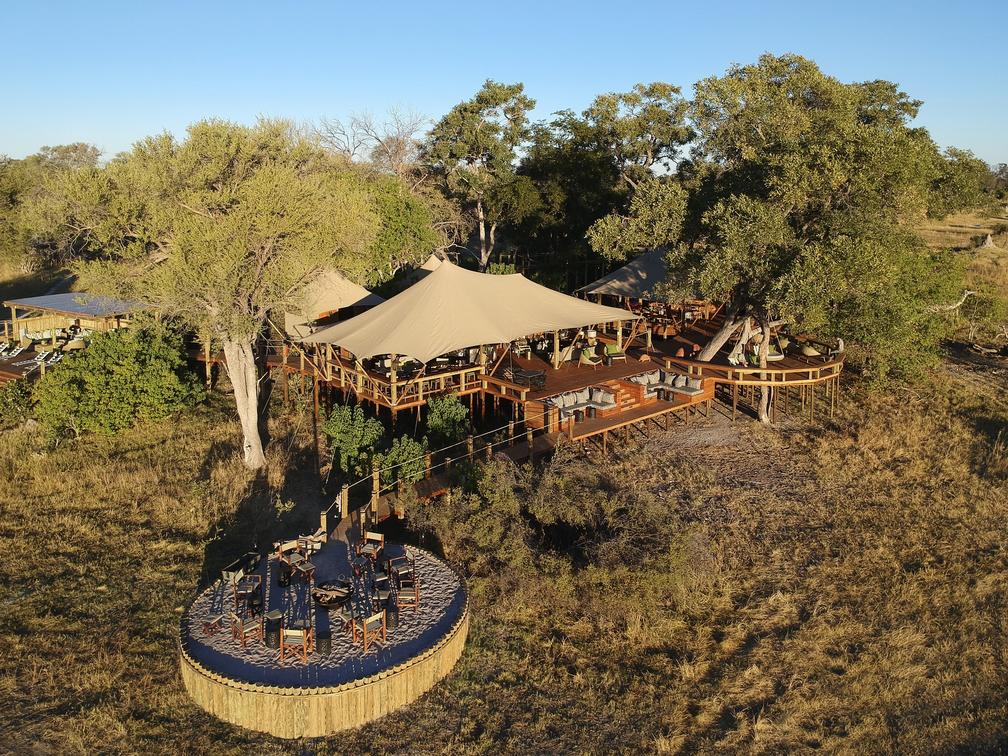
Whilst the umbrella of leadwoods make for a deliciously romantic tree-house atmosphere, it is Tuludi’s views which WOW! Wherever you find yourself – cooling off in the pool at midday, in your bathroom brushing your teeth at dawn or ensconced, G&T in hand, in the swing chair on the main deck at sunset, you’ll be dazzled by the Delta views! For those who can’t bring themselves to siesta the heat of the afternoon away, you’ll be able to watch zebras, giraffes, buffalos, and elephants who venture out in the midday heat.2. The Concept: Storybook Tree-houses!
I remember our childhood tree-house with wonder-infused delight, and how it inspired a love for nature, cocooned as it was in a wild profusion of indigenous plants, birdsong and the dappled-shade coolness of towering trees. So when we arrived at Tuludi, the sight of their perfectly perched tents elevated above the floodplain amongst the leadwood trees whisked me straight back into that wide open space of liberating awe!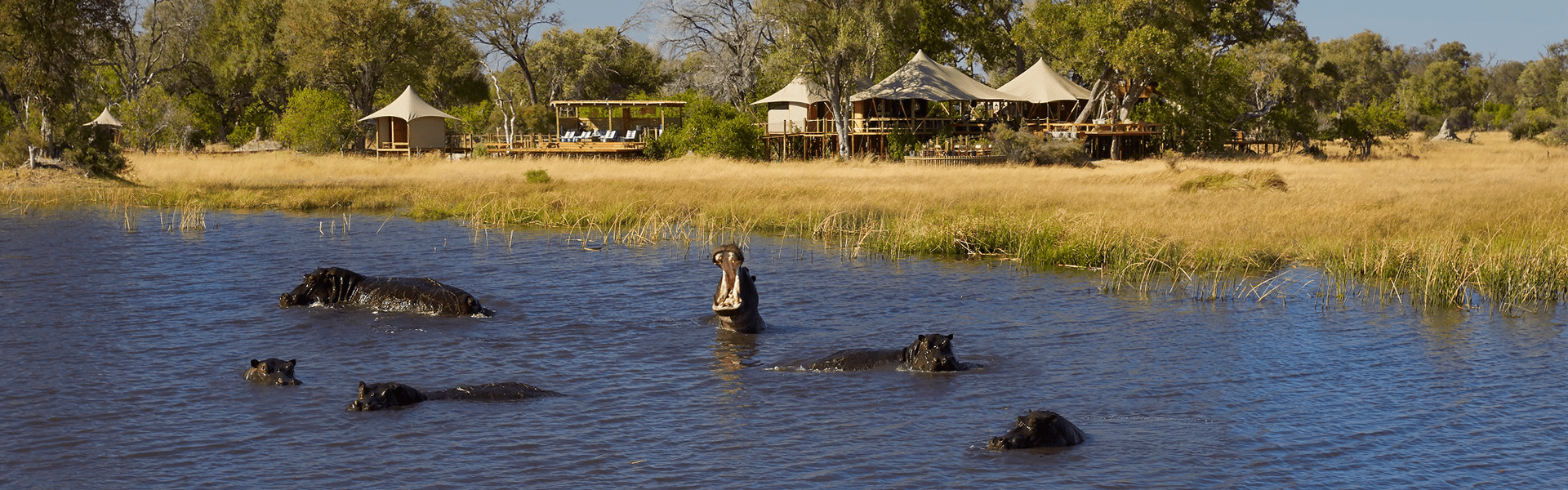

Interior design
The seven, tree-house tents magically bring the outside in, with botanical-inspired interiors reflecting the gentle natural color palette of the flora against a backdrop of serene bone-white, embroidered with subtle nods to the historical nostalgia of the safari: a Persian rug here, hanging lanterns there, antique maps, romantic mosquito nets.

HE(ART)FELT DECOR
Traditional African basketry and weaving are emboldened by modern geometric prints, with Ardmore’s playful textiles in cheeky hues delightfully detailing the Delta’s flora and fauna. We also loved the specially created art by artist Sarah Kelly! As gorgeous and hugely spacious as the tents are, what Tuludi has managed to do with their outside spaces is incredibly creative! They designed very special spaces to be outside: from the privacy of your deck’s plunge pool, the cozy, conversational circle around the fire-pit, soaking up the glorious golden hour in the swing-chair on the deck… (This intentional inventiveness they invested into how their outside spaces could invite rest, repose and intimacy makes Tuludi a divine space to turn your safari into a proper vacation.)

Architectural design
What really amazed me about being inside my tent or Tuludi’s main area spaces (like the magnificent mosaic bar!) was how I never felt as though I was blocked off or removed from nature. I think it was the exceptionally clever combination of plenteous wood (in the construction itself, as well as the wooden furniture) and expansive floor-to-ceiling windows, allowing the gentle tuludi light to fill the interiors – and, of course, totally eliminating that claustrophobic sensation of peeking out at the world through a cramped little window.
Even the bathroom view was breathtaking!
I think it was the exceptionally clever combination of plenteous wood (in the construction itself, as well as the wooden furniture) and expansive floor-to-ceiling windows, allowing the gentle tuludi light to fill the interiors – and, of course, totally eliminating that claustrophobic sensation of peeking out at the world through a cramped little window.
Even the bathroom view was breathtaking!

Other genius architectural nods to the nostalgic whimsy of childhood tree-houses are:
- Winding wooden boardwalks that weave wondrously between the trees, the tented suites and main area
- Swing-chairs hanging from the boughs, reminding me of weaver’s nests swinging from the same branches in the gentle afternoon breezes
- The tree-house library (which I snuck away to on more than one occasion) simply to revel in that childlike emotion of hiding away from what you ‘should’ be doing and indulgently disappearing between the covers of your adventure du jour. I can’t even begin to describe how sweet the ‘silence’ was, sparkling with the songs of birds I’ve never heard before, and the whispering of the leadwood leaves.
But what really made me feel an exhilarated 10 years old again was discovering how they’d playfully made leaving the tree-house a magical thing: a thrilling twirly-whirly slide — a la ‘The Magic Faraway Tree’!
3. The most beautiful bar I’ve ever seen!
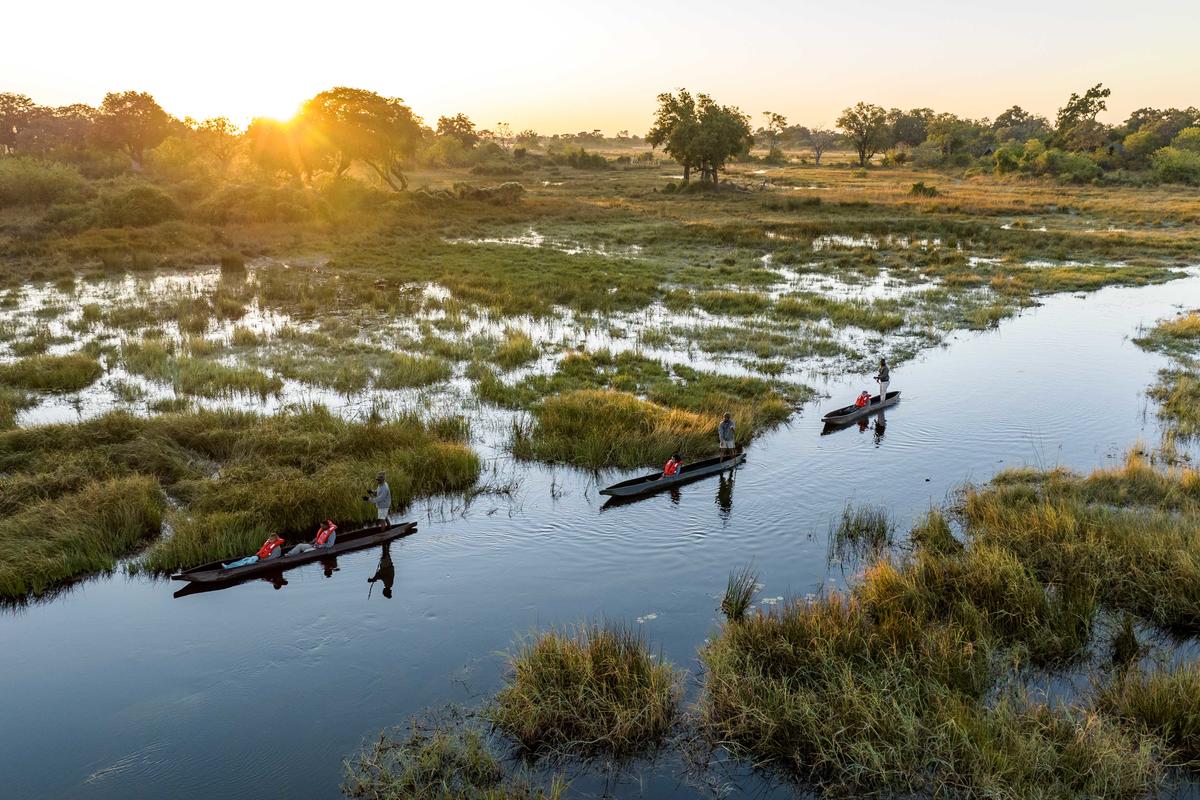
After exploring the extraordinary ecosystem on foot, mokoro or game drive (I recommend all three – they each provide a completely unique vantage point, variety of wildlife and sensorial experience), the best place to ‘rehydrate’ is at the absolutely spectacular masterpiece of a bar which comes alive as the sunlight glitters over the delicate mosaic ‘painting’ by artist Sarah Pryke. Just look at how close to nature her visual poetry is!

Khwai Private Reserve is a bird-lover’s paradise!
Thought to be monogamous, and unusually with both male and female having the same coloring, lilac-breasted rollers have a fascinating courtship flight, diving from extreme heights, rocking and rolling! Just mesmerizing! Sarah Pryke captured the pied kingfisher‘s pattern and coloring to perfection! (Did you know that it is the only black and white kingfisher in the world?) Another interesting fact is that they are the largest of Africa’s hovering birds – and can swallow their meal in mid-flight.
 It’s hard to imagine that the bold bloom of the sausage tree becomes a gargantuan sausage-shaped fruit. The ‘woody berries’ range from 30cm to 99cm (12 – 99 inches) in length, with a circumference of between 18 – 20cm (7 – 8 inches), weighing in at 5 – 10kg!
The unique ‘Kigelia africana‘ is the only species in its genus. More fragrant at night, the flowers are pollinated by bats – and are visited during the day by birds and insects for its nectar and pollen – as you can see in this part of the mosaic. Fans of the ‘sausages’ include elephants, warthogs, giraffe, hippos, porcupines, baboons and monkeys!
It’s hard to imagine that the bold bloom of the sausage tree becomes a gargantuan sausage-shaped fruit. The ‘woody berries’ range from 30cm to 99cm (12 – 99 inches) in length, with a circumference of between 18 – 20cm (7 – 8 inches), weighing in at 5 – 10kg!
The unique ‘Kigelia africana‘ is the only species in its genus. More fragrant at night, the flowers are pollinated by bats – and are visited during the day by birds and insects for its nectar and pollen – as you can see in this part of the mosaic. Fans of the ‘sausages’ include elephants, warthogs, giraffe, hippos, porcupines, baboons and monkeys!

The colors in this pangolin’s mosaic ‘scales’ are absolutely exact – especially when the golden hour drenches everything in its gentle light.